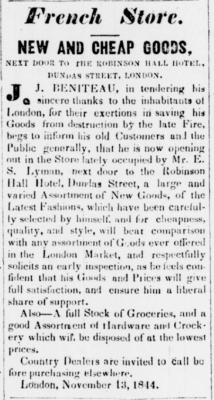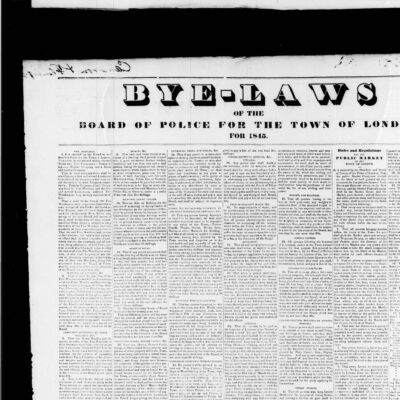
In the mid-1840s, the young village of London faced two major fires—one in October 1844 and another in April 1845. At that time, fire protection was extremely limited. The volunteer brigade, organized only three years earlier, remained “merely a bucket affair,” with a by-law requiring every householder to keep a black-painted leather bucket ready for use.
The devastation of the 1844 fire marked a turning point. In response, the community acquired, thanks to the Hon. G. J. Goodhue a “fire engine,” a hand-powered machine with capability only slightly better than a watering can but lower than a lawn sprinkler.
This first engine saw only a few minutes of action during the second major fire in April 1845, often referred to the Great Fire of London, before the rapidly spreading flames forced its abandonment. The engine itself was destroyed along with nearly 300 buildings in that conflagration.
While primitive by today’s standards, the purchase of this modest fire engine marked an important step forward. It represented London’s first investment in mechanical fire-fighting equipment, setting the stage for the development of a modern fire service in the decades to follow.